The problem isn't politics, it's the intention

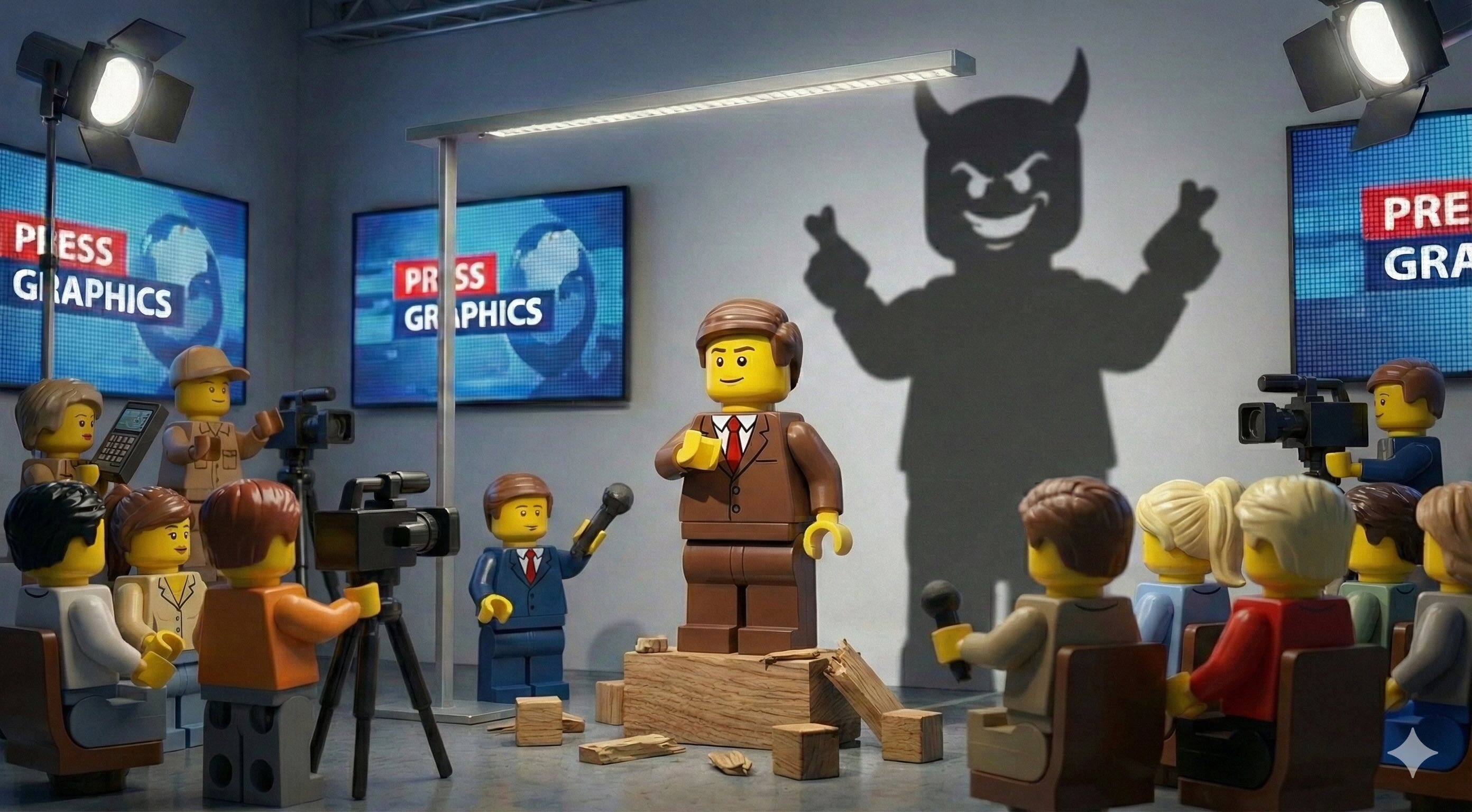
The problem isn't politics, it's the intention.
TLDR: Office politics is not inherently bad; it is an unavoidable social mechanism for coordinating action within an organization. The real problem is not politics, but the intention behind it (ethics vs. manipulation).
Key Takeaways:
- Proven benefits: Political skills are correlated with better performance, accelerated career growth, less stress, better control over one's environment, and more effective ethical leadership.
- Politics vs. Manipulation: Politics becomes toxic when it is hidden, selfish, and twists the truth. It is positive when used for coordination, creating alliances, and facilitating transparent decision-making.
- Data is not enough: Decisions are social before they are rational. Being right about the numbers is useless if no one is aligned with your vision.
- Refusing politics = refusing impact: Avoiding politics doesn't make it go away; it simply removes you from the equation and deprives the organization of your contribution.
- Introversion is not an excuse: Influence doesn't require making noise, but having the right intention. Active listening and one-on-one dialogues are powerful political weapons.
Data is not sufficient
You walk into a meeting with a correct vision, a clear objective, and a killer recommendation. Your analysis is solid, risks are mapped out. You have an ambitious but realistic game plan. Ten minutes later, you realize the decision is drifting away from your recommendation: two stakeholders are already aligned on a different plan. Afterward, someone gives you advice:
"You should have prepared the ground before the meeting."
To you, the notion of preparing the ground or talking to others before a decision-making meeting feels like manipulation, backstage games, and a lack of transparency.
The truth is different: ensuring we meet the needs and questions of our strategic stakeholders is indispensable for achieving our goals.
When the intention is good and the approach is transparent: the method is ethical.
In organizations, decisions are social before they are rational, even if “Data don’t lie”.
This doesn't mean data is irrelevant; it means the people receiving it must be prepared to interpret it in the same way we do if we wish to have a real impact and influence.
Politics is not optional
If your work depends on other people, you are already in a political environment.
Indeed, workplaces are made of interdependent tasks, imperfect information, and competing priorities. Someone has to decide what matters this week, what gets funded, what gets shipped now or later, and what risks are acceptable. These decisions are rarely made by spreadsheets alone.
Avoiding politics does not eliminate politics; it eliminates your participation and involvement in the action. Voluntarily withdrawing from the political arena out of a conviction that these are unethical behaviors undermines your ability to contribute to thinking and deprives the organization of your talent and potential.
Politics vs. Manipulation: Why is politics scary?
If the word "politics" has such a bad reputation, it's because it is often associated with House of Cards-style low blows. Originally, however, politics simply designates the art of organizing the life of a group.
The problem is a perception bias: we only notice politics when it is toxic. When influence is fluid and honest, we call it "leadership" or "teamwork." When it is hidden and selfish, we call it "politics." We must therefore draw a clear line:
- Manipulation (the dark side): It is winning by twisting the truth or removing choice from the other person. It involves hiding key info, creating false urgency, or trapping a colleague to get a "yes."
- Positive politics (the useful side): It is coordination. It is helping others understand your ideas, creating alliances for legitimate projects, and facilitating decisions. It is strategic, yes, but you have nothing to hide.
This is where ethics makes all the difference. Your ability to be authentic and to be perceived as such is central. But beware of the trap: this does not mean becoming a good actor. If your goal is to act to deceive, it is disguised manipulation. For politics to be healthy, your sincerity must not be a performance, but reality.
A few questions to test our own intention
Before starting to "work" your stakeholders, and to reassure yourself about your ethical approach, take the time to test your own intention. Humility is required when we want to lead with integrity and success.
- What real goal am I serving, and whose problem does it solve? Mine? Theirs? Ours?
- If I got no credit for it, would I still pursue this?
- Am I presenting the complete picture (compromises, risks, uncertainties), or selecting facts that serve my point?
- Who might feel the negative consequences of my decision or project? Have I included them in the conversation?
- Am I using pressure (deadlines, urgency, social proof) in a way that allows freedom of choice for decision-makers?
- Am I comfortable debating my decision or project publicly?
- If this goes wrong, what would the consequences look like? Am I ready to accept them and repair the harm?
The Proven Benefits of Political Skills
Far from clichés about manipulation, science confirms that political skills are an essential lever for performance.
Recent research is formal: knowing how to navigate the social environment pays off big, both for the individual and the company.
Here are the three major impacts validated by research:
1. A career and performance accelerator
Politically skilled employees don't just work well; they succeed better. Studies show a direct correlation with:
- Superior performance evaluations from managers.
- Faster professional ascent (more promotions and better salary).
- A solid reputation thanks to privileged access to strategic information.
2. A shield against stress
Political intelligence protects mental health.
By understanding power plays and networks, these individuals feel better control over their environment. Result: they suffer less anxiety, resist work overload better, and are less prone to burnout.
3. The "X Factor" of ethical leadership
Integrity alone is not enough to mobilize the troops. An ethical leader without political sense has little impact. It is the combination of High Ethics X Strong Political Skills that explodes results.
The concrete effect: the Ethics X Politics combination demonstrates an increase in the following behaviors:
- Altruism: Helping specific colleagues with their tasks (e.g., training new recruits, assisting a struggling colleague).
- Conscientiousness: Going beyond minimum requirements (e.g., working later, using time efficiently, maintaining high standards).
- Sportsmanship: Maintaining a positive attitude, tolerating inconveniences, and avoiding complaints.
- Courtesy: Preventing interpersonal conflicts through polite, considerate, and respectful behavior.
- Civic Virtue: Actively participating in the social life of the company (e.g., attending meetings, staying informed).
Are there still skeptics in the room?
“If I do good work, I shouldn't need politics.”
Quality work is necessary, but it can still fail to land if stakeholders are not aligned on objectives, risks, or constraints. Ethical politics is the way you make your work readable so it can be adopted.
“I am introverted. It will seem fake.”
Influence doesn't need to make noise. Being introverted or discreet is not an obstacle. Political competence relies on intention, not extraversion. Prioritize "quiet moves": active listening, strategic writing, and one-on-one dialogues. That feeling of discomfort? See it as a moral compass to stay authentic, not as an excuse to remain passive.
“Ethics is naive, nice people finish last.”
Trust is earned in drops and lost in liters (or gallons). Dishonest gains end up being paid for in loss of network and credibility. However, faced with a fundamentally corrupt corporate culture, the solution is not to become cynical or more skilled, but to leave.
Conclusion? Enter the game, it can be beneficial and ethical
Office politics is not a moral failure; it is the social mechanism by which organizations coordinate under constraints. The moral question is what you do with this mechanism. Political skill can help you read situations, build relationships, and communicate in a way that gains true buy-in.
References
Bing, M. N., Davison, H. K., Minor, I., Novicevic, M. M., & Frink, D. D. (2011). The prediction of task and contextual performance by political skill: A meta-analysis and moderator test. Human Performance, 24(5), 417–437.
Ferris, G. R., Treadway, D. C., Kolodinsky, R. W., Hochwarter, W. A., Kacmar, C. J., Douglas, C., & Frink, D. D. (2005). Development and validation of the political skill inventory. Journal of Management, 31(1), 126–152.
Gill, A., Lapalme, M.-È., & Séguin, M. (2014). When politics meets ethics: How political skill helps ethical leaders foster organizational citizenship behaviors. Journal of Managerial Issues, 26(3), 204–218.
Munyon, T. P., Summers, J. K., Thompson, K. M., & Ferris, G. R. (2015). Political skill and work outcomes: A theoretical extension, meta-analytic investigation, and agenda for the future. Personnel Psychology, 68(1), 143–184.
Perrewé, P. L., Zellars, K. L., Ferris, G. R., Rossi, A. M., Kacmar, C. J., & Liu, Y. (2004). Political skill as an antidote to the role overload-strain relationship. Journal of Occupational Health Psychology, 9(2), 141–152.
Shi, J., & Chen, Z. (2014). Leader political skill, influence tactics, and member performance: A supplementary fit perspective. Journal of Management, 40(2), 542–565.
Si, W., Tang, X., & Liu, Y. (2024). Ethical leadership, internal job satisfaction and organizational citizenship behavior: The moderating role of leader empathy in emerging industries. Humanities and Social Sciences Communications, 11(1), Article 222